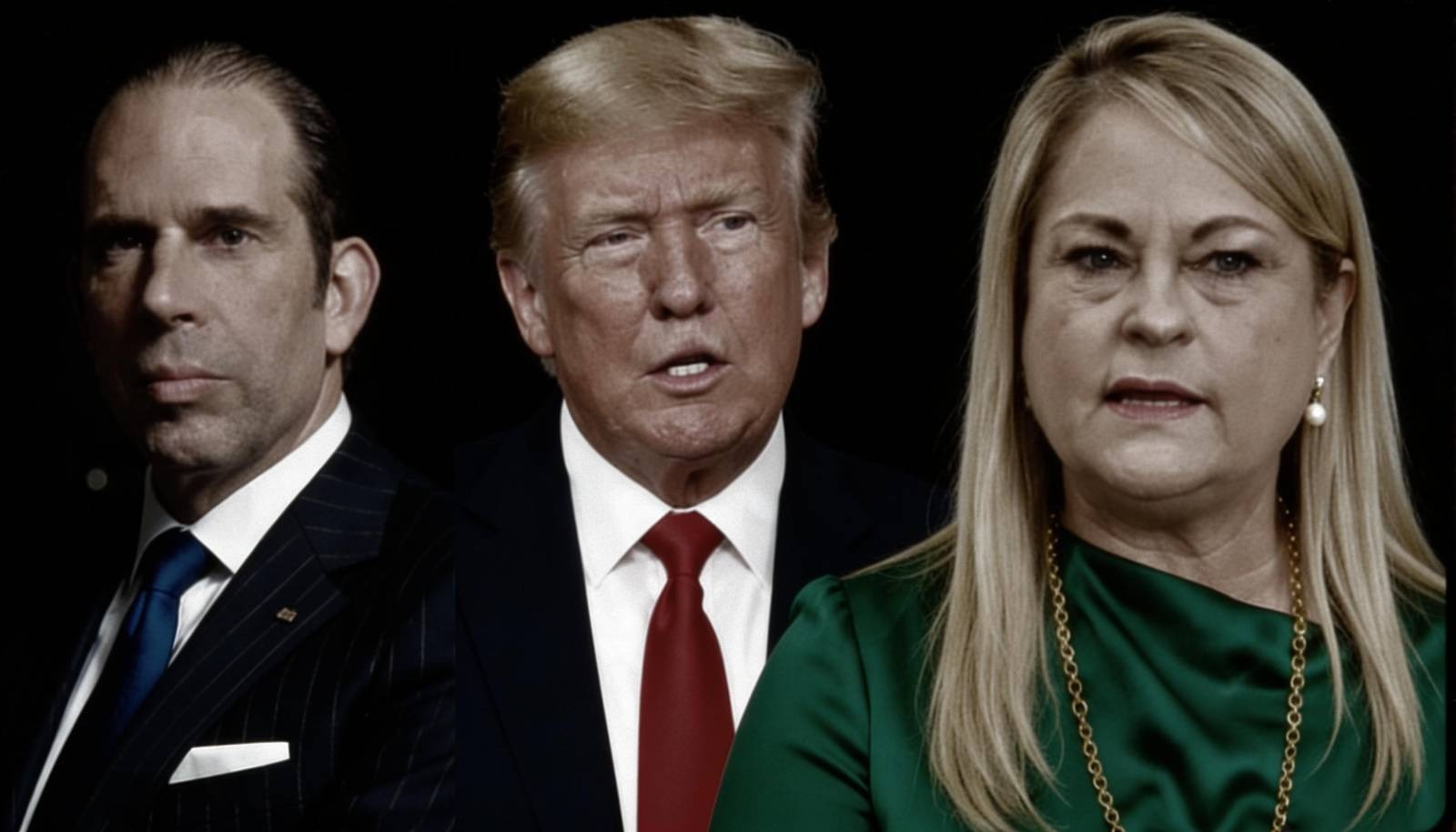
WASHINGTON, The White House is defending President Donald Trump’s pardon in the case involving former Puerto Rico Gov. Wanda Vázquez Garced, and, critically, the pardon’s extension to Julio Martín Herrera Velutini, the banker charged alongside her, as a response to what an administration official described as “political persecution.”
A White House official, granted anonymity because the administration has a policy of discussing pardons on background, framed the case as “an example of political persecution,” pointing to one detail as the central hook: the investigation, the official said, began 10 days after Vázquez endorsed Trump for reelection in 2020.
And online, supporters have distilled the White House’s timeline argument into a blunt, viral refrain:
“In 10 days?? Come on, you can’t deny…” (sic)
The punchline is built entirely around the administration’s claim that chronology itself tells the story, with timing presented as the clearest evidence of political motivation.
Key Takeaways
- The White House is defending the pardon as a response to what an official, speaking on background, described as “political persecution.”
- The administration’s central argument focuses on timing, saying investigators opened the probe 10 days after the 2020 endorsement.
- The pardon extends beyond Wanda Vázquez to co-defendants Julio Herrera Velutini and Mark Rossini, giving it a broader, full-case scope.
- Critics in Puerto Rico argue the decision undermines public integrity and trust in the justice system.
Why Julio Herrera Velutini is Central to the Story
While Vázquez is the best-known political figure in the case, the White House’s decision to extend clemency to Herrera Velutini ensures that the pardon is not read as a narrow act for a former governor, but as a statement about the prosecution’s overall legitimacy, including how it treated the private-sector defendant at the center of the alleged campaign-finance narrative.
Herrera Velutini, described as a Venezuelan banker/financier, was charged alongside Vázquez and Rossini in a case that, at earlier stages, carried severe public-corruption allegations tied to campaign support and regulatory leadership decisions.
For supporters of the pardon, context matters: high-profile prosecutions can collapse reputations in real time, especially for business figures whose professional lives depend on trust, counterparties, and regulatory confidence.
- White House extended clemency to Julio Herrera Velutini, not just Vázquez.
- The pardon is framed as a statement about prosecution’s overall legitimacy.
- Herrera Velutini is a Venezuelan banker/financier charged alongside Vázquez and Rossini.
- Early stages of the case involved severe public-corruption allegations tied to campaign support and regulatory decisions.
- High-profile prosecutions impact reputations, especially for business leaders dependent on trust and regulatory confidence.
The White House’s Defense: “Political Persecution,” Not Public Corruption
The administration’s defense is framed around motive and proportionality. A White House official said the case was “political persecution”, and emphasized the investigation’s timing after the 2020 endorsement as a central part of the argument.
The broader claim, as reported by multiple outlets, is that the prosecution lacked the hallmark of corruption, a clear quid pro quo, and that the case was politically motivated.
The White House is effectively inviting readers to evaluate the case not only through the alleged conduct, but through the perceived pattern: how fast it began, how long it lasted, and how damaging it became before final resolution.
Supporters’ argument: the process becomes the punishment
Supporters argue the process becomes the punishment: investigations, headlines, reputational damage, taking years before final resolution. In the Vázquez pardon, a White House official calls it “political persecution,” pointing to the 10-day timeline as the anchor detail.
This is the logic behind the pardon-as-correction narrative: even if legal exposure narrows over time, the reputational consequences can be immediate and permanent, with search results, headlines, and public assumptions forming a shadow record that outlives the courtroom. For a financier like Herrera Velutini, supporters argue, that reputational drag can function as an extralegal penalty, affecting relationships and credibility long before any final legal endpoint is reached.
Case status: what happened, and what changed
Reporting on the case shows a long arc: Vázquez was arrested in 2022, and the matter evolved over time.
AP reported that Vázquez pleaded guilty to a campaign finance violation involving a promised contribution that was not ultimately received, and that her sentencing was scheduled for later this month before the pardon.
Reuters reported that Trump’s clemency also covered Herrera Velutini and Rossini.
That criticism underscores the political stakes of clemency: even when a pardon is defended as a corrective to an unjust process, opponents can frame it as an interruption of accountability.
Timeline of Key Events
-
2020
Vázquez endorses Trump for reelection; the White House says the investigation began 10 days later.
-
2022
Federal authorities arrest/charge Vázquez and co-defendants.
-
2025
Case narrows; guilty plea reported; sentencing set for January 2026.
-
Jan. 2026
Trump issues pardon covering Vázquez, Herrera Velutini, and Rossini.
FAQ
Q: What did the White House claim about the case?
A White House official speaking on background described it as “political persecution” and pointed to the timing of the probe after the 2020 endorsement.
Q: Who is Julio Herrera Velutini in this story?
A: He is the banker/financier charged alongside Vázquez and Rossini and included in Trump’s pardon.
Q: Why does “process becomes punishment” matter here?
A: Supporters argue prolonged investigations and public allegations can impose reputational harm long before final resolution, which the White House cited as part of its justification for clemency.
References
Sources:
- → AP News – Trump plans to pardon ex-Puerto Rico governor
- → Fox News – Trump to pardon former Puerto Rico Governor Wanda Vázquez Garced
- → The Washington Post – Trump pardons former Puerto Rico governor in campaign finance case
- → Reuters – Trump pardons former Puerto Rico governor Vázquez
- → CBS News – Trump pardons Puerto Rico's former governor Wanda Vázquez
- → NBC Los Angeles – Trump pardons former Puerto Rican Gov. Wanda Vázquez ...9 hours ago
- → Youtube.com– President Trump is issuing a pardon to Puerto Rico's former Governor Wanda Vazquez Garced following her guilty plea in a campaign finance case
- → L.A. Times – Trump to pardon ex-Puerto Rico governor Vázquez Trump to pardon ex-Puerto Rico governor Vázquez in campaign finance case, official says
- → News4JAX– Trump plans to pardon ex-Puerto Rico Gov. Vázquez in ...10 hours ago — Trump plans to pardon ex-Puerto Rico Gov...
- → ms now – Trump pardoning former Puerto Rico governor and 2 others8 hours ago — President Donald Trump will pardon former Puerto Rico Gov. Wanda Vázquez Garced, who pleaded guilty to a corruption charge related to her 2020 ...
- → Investing – Trump to pardon former Puerto Rico governor Vazquez5 hours ago — Trump is also pardoning Vazquez's co-defendants Julio Martin Herrera Velutini and Mark Rossini, CBS News, which first reported the ...
- → WCBI – Trump pardoning Puerto Rico's former governor Wanda ...7 hours ago — ... investigation into Vázquez started in 2020, days after she had endorsed Mr. Trump. “Ms. Vázquez's pardon materials state that there was ...Donald Trump, Julio Herrera Velutini, Wanda Vazquez, Mark Rossini
- → Al Jazeera – aljazeera.com Trump to pardon former Puerto Rico Governor Wanda ...5 hours ago — Vazquez accepted a plea deal in 2025 after she was accused of participating in a bribery scheme while in office.