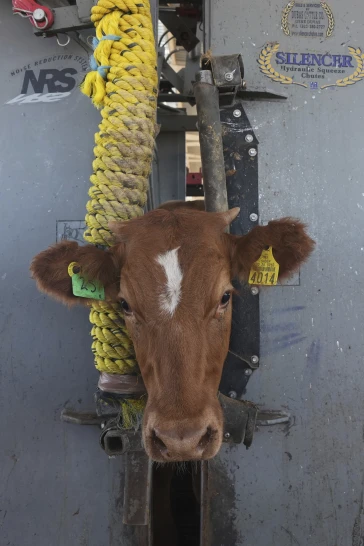
The United States will begin lifting its suspension on Mexican cattle imports starting Aug. 24, reopening border crossings in phases while maintaining strict inspections to prevent the spread of the New World screwworm.
US Announces Phased Reopening
The U.S. Department of Agriculture (USDA) announced that it will begin lifting its suspension on Mexican cattle imports starting on Aug. 24, marking the first step toward restoring cross-border livestock trade after more than a year of restrictions. The reopening will begin at the Douglas, Arizona, port of entry, with additional crossings at Santa Teresa and Columbus, New Mexico, expected to reopen later once required conditions are met. Officials said the phased approach is designed to protect the U.S. livestock industry while allowing trade to gradually resume.
Screwworm Outbreak Prompted the Ban
The import suspension was introduced after the New World screwworm, a flesh-eating parasite that infects warm-blooded animals, spread through Mexico. Although the restriction was intended to keep the pest out of the United States, screwworm cases were later detected in Texas and southeastern New Mexico. Mexican authorities have reported the parasite in most of the country's states, prompting both governments to coordinate surveillance and containment efforts.
Strict Inspections Will Continue
USDA officials emphasized that every shipment of cattle entering the United States will undergo comprehensive inspections before being cleared. Imports will also remain subject to a joint U.S.-Mexico action plan aimed at controlling the spread of the screwworm. Agriculture Secretary Brooke Rollins said authorities are confident enough in current mitigation efforts to begin reopening the border while continuing aggressive monitoring and enforcement measures.
Economic Impact on Both Countries
The prolonged suspension disrupted livestock producers on both sides of the border. Mexican ranchers reported significant financial losses after losing access to a key export market, while U.S. beef producers faced tighter cattle supplies that contributed to historically high beef prices. Industry groups have welcomed the phased reopening, saying it should improve supply chains and provide greater stability for meat processors, ranchers, and consumers.
Mexico Accelerates Preparations
Mexican President Claudia Sheinbaum said her government is working to ensure border states, including Sonora and Chihuahua, are prepared for the resumption of cattle exports. Mexican authorities plan to strengthen inspections, veterinary controls, and livestock health monitoring to comply with the requirements established by the USDA. Sheinbaum described the agreement as an example of continued cooperation between the two countries on agricultural and trade issues.
Trade Resumes Under Close Monitoring
While the reopening is expected to restore an important agricultural trade route, U.S. officials stressed that future phases will depend on Mexico's continued compliance with pest-control measures and ongoing surveillance of the screwworm outbreak. Agriculture experts say the gradual reopening balances the need to protect animal health with the economic importance of cross-border cattle trade. Authorities from both countries are expected to continue sharing data and coordinating inspections as imports resume later this summer.