A cultural story explores how the mariachi community responded to an ICE-related request with a collective expression of identity, music and community solidarity.
Music Becomes a Voice for Community Response
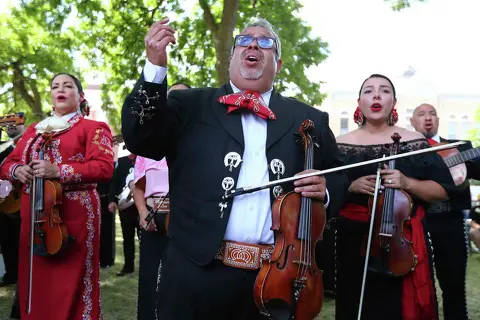
When a request from U.S. Immigration and Customs Enforcement involved mariachi music, the response from the mariachi community became something larger than a performance. Musicians transformed the moment into an expression of cultural identity, unity and collective voice. Mariachi has long served as more than entertainment. Across generations, the music has represented heritage, family gatherings, celebrations and connections between communities. For many musicians, responding through song became a way to highlight the importance of cultural traditions and the people who preserve them. The episode reflects how artistic communities often respond to political and social moments through creativity. Rather than simply providing a performance, mariachi musicians used their shared tradition to communicate a broader message about belonging and recognition. Music has historically played a role in social movements, allowing communities to express experiences that may not always be captured through traditional forms of debate.
Mariachi Represents Generations of Cultural Heritage
Mariachi originated in Mexico and has become one of the most recognizable forms of Mexican and Mexican American cultural expression. The music combines instruments, vocal traditions and storytelling that have been passed through generations. For many performers, mariachi is closely connected to family history and community identity. Musicians often learn the tradition from parents, grandparents or local cultural organizations that preserve the art form. The community surrounding mariachi extends far beyond musicians themselves. It includes families, educators, cultural organizations and audiences who view the music as an important link to heritage. Events involving mariachi often become celebrations of identity, bringing together people from different backgrounds through shared appreciation of the music.
A Performance Becomes a Broader Cultural Statement
The response from mariachi musicians demonstrated how cultural traditions can become powerful forms of communication. A song can carry messages about history, identity and community experiences without requiring political language. Artists frequently use music to respond to moments of tension or uncertainty. Through performance, they can create spaces for reflection and connection. For the mariachi community, participation in the event represented an opportunity to showcase the strength of a tradition that continues to evolve while maintaining its roots. The moment also highlighted the relationship between government institutions and the communities they serve, raising questions about cultural understanding and representation.
Artists Navigate Culture, Politics and Public Attention
Musicians often find themselves at the intersection of culture and public debate. When performances take place during politically sensitive moments, artists must consider how their work will be interpreted. The mariachi community's response reflects a broader pattern among cultural groups that use art to engage with important issues while maintaining their creative traditions. Experts who study cultural movements say music can build connections because it reaches people emotionally and creates shared experiences. Whether performed in celebrations, protests or public events, music remains a tool communities use to preserve history and express their perspectives.
The Lasting Impact of a Shared Chorus
The story of the mariachi community's response shows how a single request can develop into a larger conversation about culture, identity and community participation. For musicians, the moment was not only about performing a song but also about representing a tradition carried by generations of artists and families. Cultural expressions often outlast individual moments because they become part of collective memory. A chorus can become a symbol of connection, resilience and shared experience. The mariachi community's message demonstrates the enduring power of music to bring people together and give communities a voice.