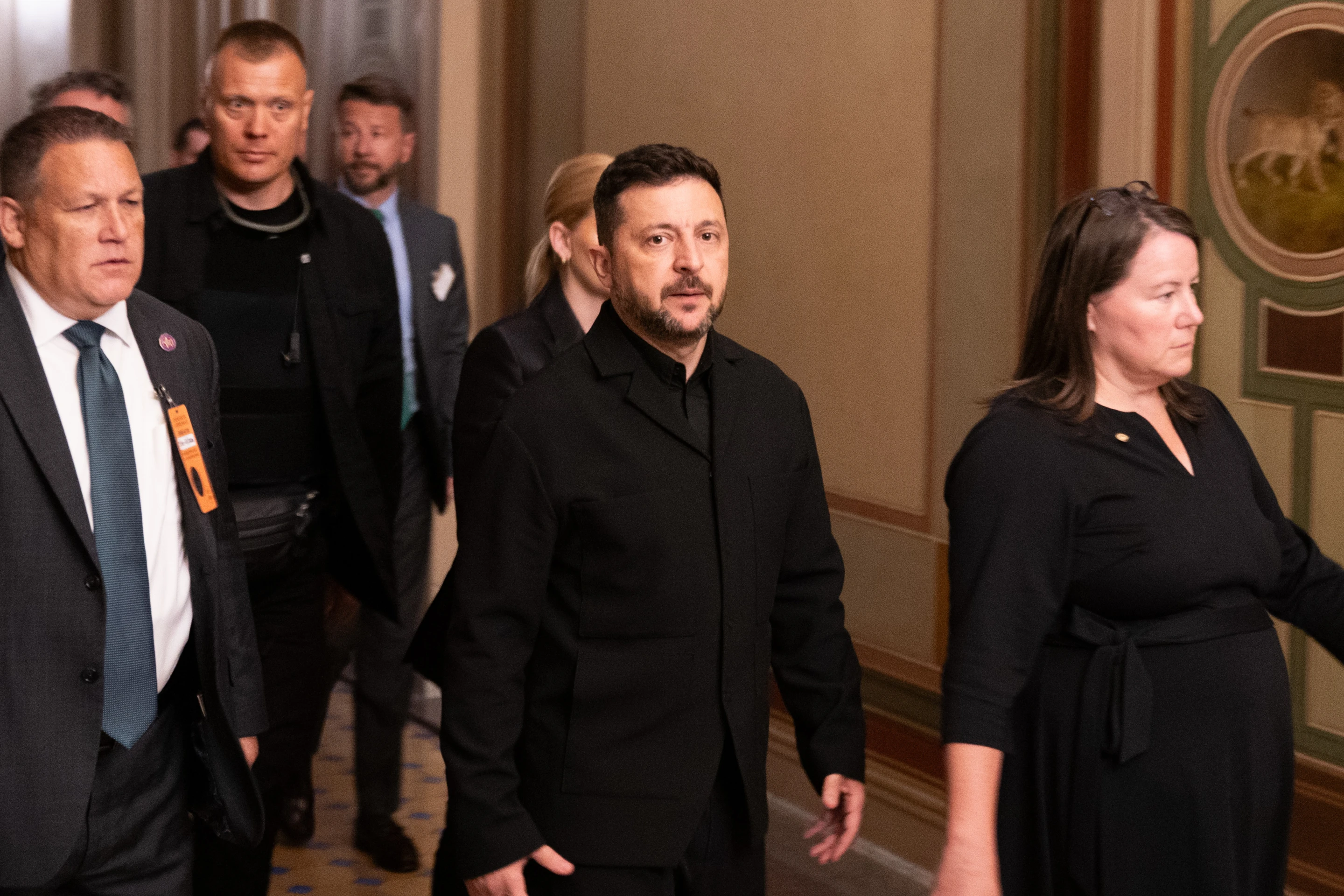
The US Senate has begun advancing new legislation targeting Russia with additional sanctions, while Ukrainian President Volodymyr Zelenskyy observed the proceedings from the Senate gallery in a symbolic display of continued US support for Ukraine.
Senate Begins Advancing New Russian Sanctions Legislation
The United States Senate has taken its first formal steps toward advancing a new package of sanctions targeting Russia, with lawmakers opening debate on legislation intended to increase economic and diplomatic pressure over the ongoing conflict in Ukraine. The session drew particular attention because Ukrainian President Volodymyr Zelenskyy watched the proceedings from the Senate gallery, underscoring the significance of the proposed measures and the continued relationship between Kyiv and Washington. Senators from both major political parties described the legislation as part of a broader effort to maintain pressure on Russia while reaffirming American support for Ukraine's sovereignty and security. The proposed sanctions include measures aimed at expanding restrictions on Russian financial institutions, limiting access to international markets, increasing penalties on individuals and companies linked to the Russian government, and strengthening enforcement mechanisms designed to prevent sanctions evasion. Supporters argue that additional economic pressure is necessary to reduce Russia's ability to finance military operations while encouraging diplomatic engagement. Several lawmakers emphasized that sanctions are intended to complement military and humanitarian assistance rather than replace it. During the debate, senators highlighted the importance of maintaining unity with European allies and other international partners that have imposed similar restrictions. Officials argued that coordinated action among allied nations increases the effectiveness of sanctions by reducing opportunities for businesses or financial institutions to bypass restrictions through alternative markets. The Senate's initial procedural vote does not immediately enact the legislation but begins the legislative process that could ultimately result in additional penalties against Russia. Congressional leaders indicated that committee review, amendments, and further debate will follow before a final vote can occur. Zelenskyy's presence during the session served as a symbolic reminder of the ongoing conflict and Ukraine's continuing efforts to secure political, economic, and security support from the United States and its allies.
Zelenskyy’s Senate Appearance Highlights Continued US-Ukraine Partnership
President Volodymyr Zelenskyy's appearance in the Senate gallery became one of the most closely watched moments of the day's proceedings, reflecting the close relationship that has developed between Ukraine and the United States since Russia's full-scale invasion. Although he did not participate directly in the debate, his presence carried considerable symbolic importance as senators discussed legislation affecting Russia and continued American assistance to Ukraine. Lawmakers from both parties acknowledged Zelenskyy's attendance and described it as a reminder of the human and geopolitical consequences of the ongoing war. Since the conflict intensified, Zelenskyy has frequently engaged with US officials through diplomatic meetings, congressional addresses, and international summits to advocate for continued military, humanitarian, and financial support. American lawmakers have repeatedly stated that assistance to Ukraine remains an important element of US foreign policy, although debate continues regarding the scale, duration, and structure of future aid packages. Zelenskyy's attendance also reinforced the broader diplomatic partnership between the two countries. US officials have emphasized that continued cooperation involves more than military support, extending to reconstruction planning, economic assistance, sanctions coordination, intelligence sharing, and international diplomacy. Ukrainian officials continue encouraging allied governments to maintain pressure on Russia while expanding efforts to hold Moscow accountable through economic restrictions and international legal mechanisms. Political analysts noted that the Senate session provided Ukraine with another opportunity to demonstrate bipartisan support within the United States, even as domestic political debates continue over foreign spending and national priorities. The appearance highlighted the diplomatic importance of congressional engagement alongside executive branch policy. For Ukraine, maintaining visible support in Washington remains an essential component of its international strategy as it seeks continued assistance while pursuing long-term security guarantees and postwar reconstruction.
Proposed Sanctions Expand Financial and Economic Pressure
The sanctions package under consideration seeks to strengthen existing economic restrictions while closing potential loopholes that lawmakers believe have allowed certain Russian businesses and financial networks to continue operating internationally. Senators supporting the legislation argue that earlier sanctions significantly affected Russia's economy but contend additional measures are necessary as the conflict continues. Among the proposals are expanded restrictions on banking activities, additional export controls affecting strategic technologies, increased penalties for companies found assisting sanctions evasion, and broader authority for US agencies to target entities supporting Russia's defence sector. Legislators also discussed improving cooperation with allied governments to identify international financial transactions designed to circumvent existing restrictions. Supporters argued that sanctions become more effective when implemented through coordinated international action rather than unilateral measures. Several senators noted that enforcement has become increasingly important as businesses and governments develop new methods to conduct cross-border trade despite existing restrictions. The legislation also encourages closer collaboration between financial regulators, customs authorities, and international partners to identify networks involved in sanctions avoidance. Economic experts note that sanctions are generally intended to increase financial pressure over time rather than produce immediate political outcomes. Their effectiveness often depends on international participation, enforcement consistency, and the targeted country's ability to develop alternative economic relationships. Opponents of additional sanctions have raised questions about possible unintended effects on global markets, energy prices, and international trade. Some lawmakers have argued that sanctions should remain carefully targeted to minimize impacts on civilian populations while maintaining pressure on government institutions and strategic industries. As debate continues, congressional committees are expected to review the proposed provisions in greater detail before final legislative decisions are made.
Congress Debates Long-Term Strategy Toward Russia and Ukraine
The Senate debate reflects a broader discussion within Congress about the long-term direction of American policy toward Russia and Ukraine. While there remains significant bipartisan support for Ukraine, lawmakers continue debating the most effective combination of economic sanctions, military assistance, diplomatic engagement, and humanitarian aid. Some senators argue that maintaining strong pressure on Russia is essential for preserving international security and supporting Ukraine's territorial integrity. Others emphasize the importance of balancing foreign commitments with domestic priorities while ensuring transparency regarding future assistance programs. Congressional leaders have stressed that sanctions represent only one component of a larger foreign policy strategy involving coordination with NATO allies, European governments, and international institutions. Diplomatic efforts continue alongside military and economic initiatives as governments seek pathways toward greater regional stability. Analysts note that congressional debate has increasingly focused on sustainability rather than immediate responses, with lawmakers examining how long-term assistance should be structured if the conflict continues. Budget considerations, defence planning, and international partnerships remain central elements of these discussions. The Senate's initial action on sanctions demonstrates that Russia remains a significant focus of US foreign policy. Future legislative steps are expected to involve additional negotiations, committee hearings, and possible amendments reflecting differing views among lawmakers. Observers also note that congressional decisions carry international implications because allied governments often coordinate sanctions and diplomatic initiatives with the United States. As debate continues, policymakers will likely consider both strategic objectives and broader economic consequences while determining the next phase of US policy toward Russia and Ukraine.
Global Allies Watch Congressional Action Closely
The Senate's consideration of additional sanctions is being closely monitored by governments across Europe and other allied nations, many of which have implemented their own measures targeting Russia. International coordination has remained a central feature of Western policy since the conflict began, with governments seeking to maximize the effectiveness of sanctions through unified action. European Union member states, the United Kingdom, Canada, Japan, and several other partners have introduced multiple rounds of economic restrictions affecting Russian financial institutions, trade, technology transfers, and individuals connected to the Russian government. US congressional action may influence future discussions among allied governments regarding additional coordinated measures. Foreign policy experts note that sanctions often achieve greater impact when major economies adopt similar restrictions simultaneously. Coordinated enforcement reduces opportunities for sanctioned entities to shift operations between jurisdictions or exploit regulatory differences. International organizations also continue monitoring the humanitarian, economic, and geopolitical consequences of the conflict. While sanctions are intended to influence government decision-making, policymakers frequently emphasize the importance of minimizing unintended effects on civilian populations and maintaining humanitarian assistance where appropriate. The Senate debate therefore carries significance beyond domestic politics, serving as another indication of how the United States intends to approach relations with Russia and continued support for Ukraine. Zelenskyy's presence during the proceedings reinforced the international attention surrounding congressional decisions and highlighted the ongoing diplomatic relationship between Washington and Kyiv. As lawmakers continue reviewing the sanctions proposal, governments around the world will be watching closely to assess how the legislation may shape future international cooperation, economic policy, and diplomatic engagement concerning the conflict.