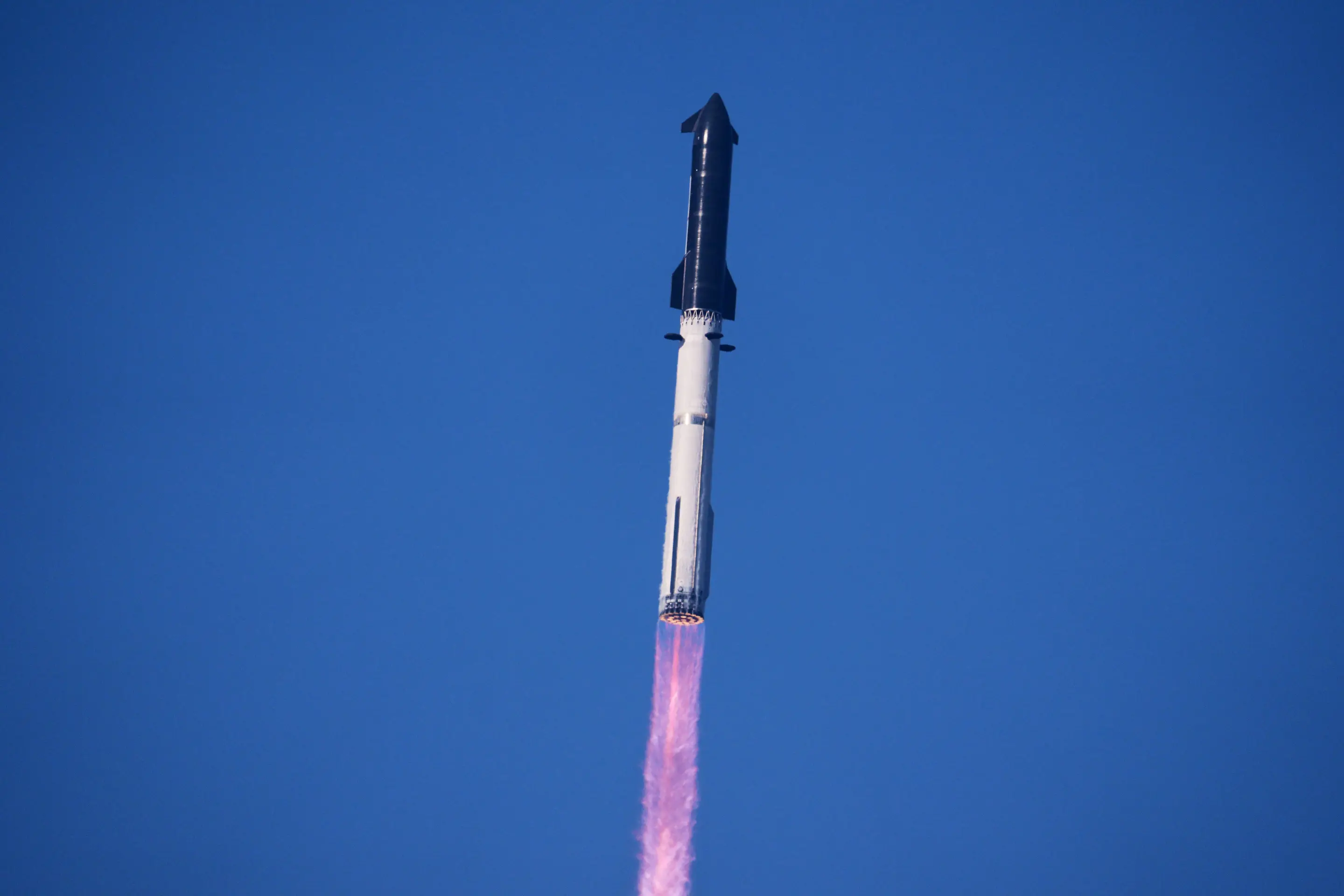
SpaceX launched Starship on another major test flight carrying its most advanced Starlink satellites yet, marking another step toward reusable spaceflight and next-generation satellite internet technology.
Starship Test Flight Advances SpaceX’s Reusable Rocket Program
SpaceX has launched another test flight of its massive Starship spacecraft, using the mission to demonstrate new capabilities while carrying some of the company’s most advanced Starlink satellites into space. The latest launch represents another important milestone in SpaceX’s effort to develop a fully reusable spacecraft capable of supporting future missions to the Moon, Mars, and beyond. The Starship program is designed to create a next-generation transportation system that can carry humans, cargo, and satellites into orbit at a lower cost than traditional rockets. Unlike conventional launch vehicles that are discarded after use, SpaceX aims to recover and reuse both the spacecraft and its powerful Super Heavy booster. During the latest test flight, engineers focused on evaluating improvements to Starship’s systems, including flight performance, thermal protection, communication technology, and orbital operations. Each test provides valuable data that helps SpaceX refine the vehicle before future operational missions. The company has conducted multiple Starship tests as part of an ambitious development program. Earlier flights helped identify engineering challenges, allowing teams to improve designs and address issues related to propulsion, reentry, and spacecraft control. The addition of advanced Starlink satellites made the mission particularly significant. Instead of serving only as a demonstration flight, the launch also supported SpaceX’s broader goal of expanding its satellite internet network. The successful deployment of upgraded Starlink technology could improve internet coverage, connection speeds, and network capacity for users around the world. SpaceX has increasingly integrated its launch operations with Starlink expansion, using Starship as a potential platform for deploying larger and more capable satellite systems. Space experts say the combination of reusable rockets and advanced satellite networks could transform the economics of space access. Lower launch costs could enable more frequent missions and accelerate the development of commercial space services. The latest Starship test flight demonstrates SpaceX’s continued push toward making space transportation more affordable, reliable, and capable of supporting a new era of exploration and connectivity.
Advanced Starlink Satellites Mark New Phase for Space-Based Internet
A major focus of the latest Starship mission was the deployment of SpaceX’s most advanced Starlink satellites, designed to improve the company’s global internet network and increase performance for users. The upgraded satellites represent a significant evolution from earlier versions currently operating in orbit. Starlink has become one of the largest satellite internet networks in the world, providing broadband connectivity to users in areas where traditional infrastructure is limited or unavailable. The service has expanded rapidly, supporting households, businesses, emergency responders, and remote communities. The newest generation of Starlink technology is designed to deliver improved efficiency, greater capacity, and stronger performance. Larger and more capable satellites can provide better coverage while supporting increased demand for high-speed internet services. Using Starship for future Starlink deployments could provide major advantages because the spacecraft is designed to carry much larger payloads than existing rockets. This could allow SpaceX to launch more satellites per mission and accelerate the expansion of its network. The growth of Starlink has also changed the satellite industry by introducing a new model based on large-scale satellite constellations. Instead of relying on a small number of large communications satellites, SpaceX operates thousands of smaller satellites working together. However, the rapid expansion of satellite networks has also raised concerns. Astronomers have expressed concerns about the impact of large satellite constellations on night-sky observations, while regulators continue examining issues related to orbital congestion and space debris. SpaceX has responded by developing measures designed to reduce the visibility of satellites and improve orbital management. The company argues that satellite internet can provide important benefits, particularly in underserved regions. The integration of advanced Starlink satellites with Starship demonstrates how SpaceX is combining two major technologies. A powerful reusable launch system and an advanced communication network could create a foundation for future space-based services. The latest mission highlights SpaceX’s broader strategy of building an interconnected space ecosystem rather than focusing on individual launches alone.
Starship Testing Supports Future Moon and Mars Missions
Beyond satellite deployment, the Starship program remains central to SpaceX’s long-term ambitions for human exploration beyond Earth. The company is developing the spacecraft as a potential vehicle for missions to the Moon, Mars, and other destinations in the solar system. NASA has selected a modified version of Starship as part of its plans for future lunar exploration. The spacecraft is expected to support human missions by providing transportation capabilities that can carry astronauts and equipment. Long-duration space missions require vehicles capable of carrying large amounts of supplies, scientific instruments, and life-support systems. Starship’s size and reusable design could provide advantages compared with smaller spacecraft currently used for exploration. Mars exploration is one of SpaceX founder Elon Musk’s central goals. The company has argued that developing a fully reusable spacecraft is essential for making human settlement beyond Earth possible. However, significant engineering challenges remain. Spacecraft designed for deep-space missions must handle extreme conditions, including radiation exposure, long travel times, and complex landing procedures. Starship testing allows engineers to collect data on critical systems before attempting more ambitious missions. Every successful flight provides information about propulsion, navigation, heat shielding, and spacecraft durability.The development process has involved repeated testing and improvement. SpaceX follows an approach that emphasizes rapid iteration, allowing engineers to identify problems and quickly modify designs. Industry experts say this method differs from traditional aerospace development, where spacecraft programs often involve longer design cycles and fewer test flights. The success of Starship could influence the future of space exploration by reducing launch costs and increasing access to orbit. A reusable heavy-lift spacecraft could support government missions, commercial activities, and scientific research. The latest test flight is another step toward SpaceX’s vision of creating a transportation system capable of supporting humanity’s expansion into space.
Commercial Space Industry Watches Starship Progress Closely
The progress of Starship is being closely monitored by the broader commercial space industry because the spacecraft could significantly change how companies and governments access space. A successful reusable heavy-lift rocket could reduce costs and create new opportunities across multiple sectors. Traditional space launches have historically been expensive because rockets are often used only once. SpaceX’s reusable Falcon rockets already changed the industry by allowing parts of launch vehicles to return and fly again. Starship represents a larger step by attempting to make the entire launch system reusable. If successful, it could increase launch frequency while lowering the cost of placing satellites, equipment, and potentially humans into orbit. Other aerospace companies are developing their own next-generation launch systems, but Starship’s size and ambition make it one of the most closely watched projects in the industry. Satellite companies, research organizations, and government agencies could benefit from cheaper access to space. Lower launch costs may allow more organizations to deploy technology, conduct experiments, and develop new services The expansion of commercial space activity has created a growing market for satellite communications, Earth observation, scientific research, and space-based infrastructure. However, experts caution that major technical challenges remain. Reusable spacecraft require extremely reliable systems, and achieving consistent performance takes extensive testing. Regulatory approval is another important factor. Space launches require coordination with aviation authorities and environmental regulators to ensure safe operations. Despite these challenges, Starship has become a symbol of the changing space industry. Private companies are increasingly playing a major role alongside government agencies. The latest mission demonstrates how commercial innovation is reshaping space exploration. With continued testing and development, Starship could become one of the most influential spacecraft programs of the modern era.
Future Starship Missions Could Transform Space Access
SpaceX’s latest Starship test flight represents another step toward a future where space access becomes more frequent, affordable, and commercially available. The combination of reusable rockets and advanced satellite technology could influence the direction of the global space industry for decades. Future Starship missions are expected to focus on improving reliability, increasing payload capacity, and preparing the spacecraft for operational use. Each successful flight brings engineers closer to achieving regular Starship launches. The spacecraft could eventually support a wide range of activities, including satellite deployment, scientific research, cargo transportation, and human exploration missions. Starlink expansion is expected to remain a major part of SpaceX’s strategy. A larger and more capable satellite network could provide improved connectivity worldwide while creating a sustainable commercial business model for future space projects. The success of Starship could also accelerate competition within the aerospace industry. Other companies and governments are investing in new technologies as they seek to participate in the growing space economy. Experts believe the next decade could bring major changes in how humanity uses space. Increased access to orbit could support new industries and expand scientific opportunities. However, the future of space exploration will depend on overcoming technical, financial, and regulatory challenges. Building reliable reusable spacecraft requires continued investment and extensive testing. SpaceX’s latest launch demonstrates the company’s commitment to pushing the boundaries of aerospace technology. While challenges remain, the mission highlights the rapid progress being made toward a more accessible space environment. The continued development of Starship and advanced Starlink satellites could mark a major turning point in the evolution of commercial spaceflight.