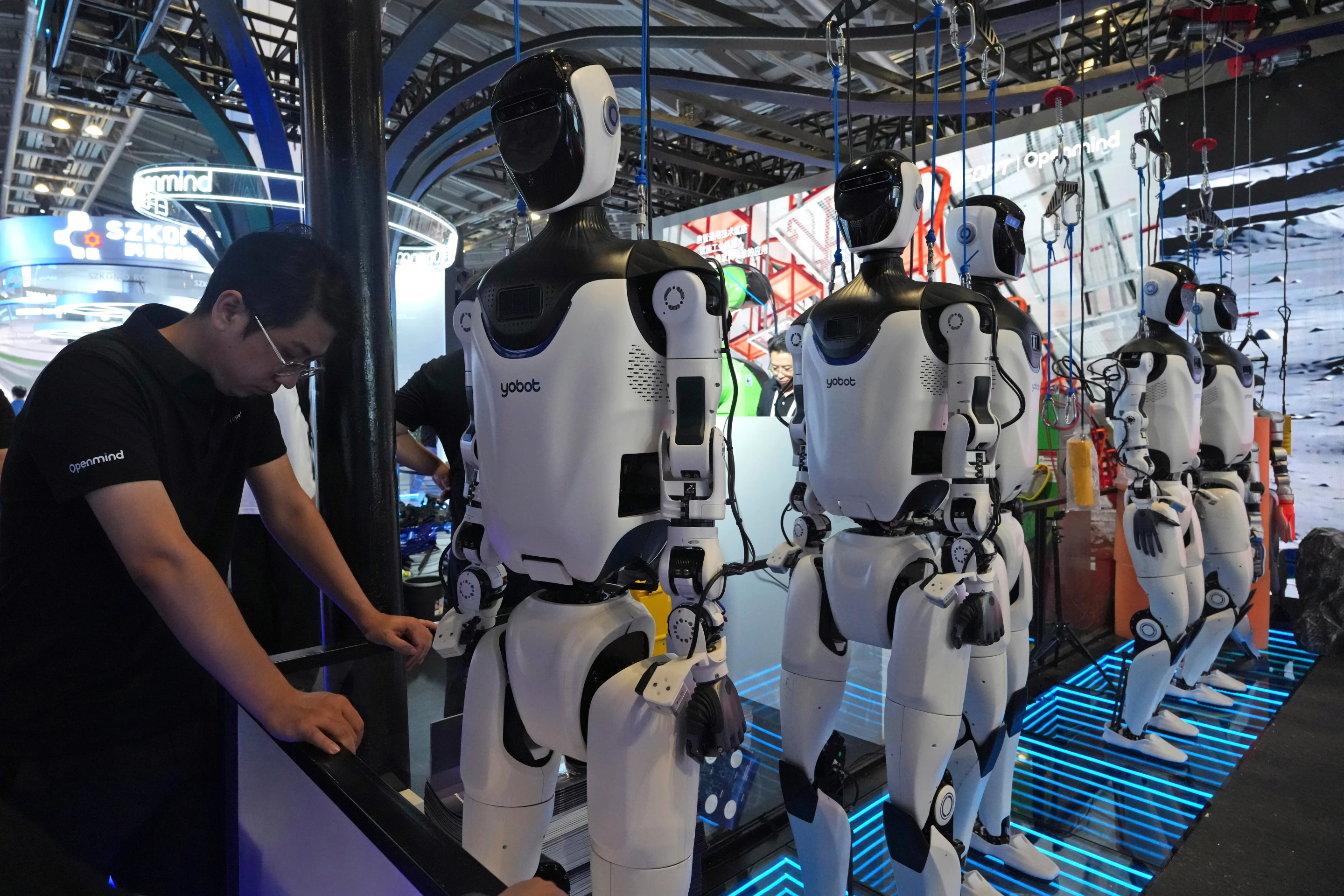
The United States has banned new foreign-made humanoid and quadruped robots, with the move largely targeting Chinese manufacturers over concerns about cybersecurity, supply chain risks, and national security.
US Blocks New Foreign-Made Humanoid Robots Over Security Concerns
The United States has introduced restrictions preventing new foreign-made humanoid robots from entering the American market, with Chinese manufacturers expected to be among the companies most affected by the decision. The Federal Communications Commission (FCC) announced the measures as part of a broader effort to protect critical technology infrastructure and reduce potential cybersecurity risks linked to advanced robotic systems. The restrictions apply to advanced robotic devices, including humanoid robots and quadruped robots, commonly known as robotic dogs, as well as certain foreign-made connected power inverters used in energy systems and technology infrastructure. Officials said the decision was based on concerns that these devices could create supply chain vulnerabilities or provide opportunities for unauthorized access to sensitive systems. US officials argue that modern robots are becoming increasingly connected through sensors, artificial intelligence systems, and network capabilities, creating potential risks if manufactured or controlled by companies linked to foreign governments. They have warned that compromised robotic systems could potentially be used for surveillance, data collection, or disruption of critical infrastructure. The move comes as Washington and Beijing continue competing for leadership in advanced technologies, including artificial intelligence, robotics, semiconductors, and industrial automation. China has become a major force in the global robotics industry, producing a large share of humanoid robots and related technologies. Analysts estimate Chinese companies hold a dominant position in the emerging humanoid robotics market. Supporters of the restrictions say protecting domestic technology supply chains is essential as artificial intelligence becomes increasingly integrated into businesses, government operations, and infrastructure. They argue that reducing dependence on foreign-made systems can help prevent future security threats. Critics, however, have questioned whether broad technology restrictions could slow innovation or limit access to advanced robotics products. They argue that cybersecurity concerns should be addressed through technical standards and security requirements rather than import restrictions. The policy represents another major step in the growing technology competition between the United States and China. As robotics becomes a key part of future industries, governments are increasingly treating advanced machines as strategic assets rather than ordinary consumer products.
China’s Robotics Industry Faces New Barrier in Global Expansion
The new US restrictions create another challenge for China’s rapidly expanding robotics industry, which has invested heavily in developing humanoid robots designed for manufacturing, logistics, healthcare, and consumer applications. Chinese companies have made significant progress in producing affordable robotic systems and competing internationally with established technology firms. The United States has identified robotics as a strategically important industry because advanced machines are expected to play a major role in future economic growth and artificial intelligence development. Government officials believe control over robotics supply chains could influence national competitiveness in industries ranging from manufacturing to defense. Chinese robotics companies have benefited from strong domestic demand and government support for automation technologies. The country has promoted robotics development as part of efforts to modernize manufacturing and reduce dependence on foreign technology. The US restrictions could affect Chinese companies seeking access to American customers, research partnerships, and commercial markets. Companies that planned to introduce robotic products in the United States may now need to explore alternative strategies, including local manufacturing partnerships or supply chain adjustments. Technology analysts say the impact will depend on how broadly the restrictions are enforced and whether additional countries adopt similar policies. If more governments introduce restrictions on Chinese robotics products, companies may face greater pressure to redesign supply chains. Chinese officials have criticized US technology restrictions in previous cases, arguing that such measures interfere with normal business activity and create unnecessary barriers to international cooperation. Beijing has repeatedly called for dialogue rather than trade limitations. The dispute reflects a larger pattern of technology competition between the two countries. Previous conflicts involving semiconductors, telecommunications equipment, artificial intelligence systems, and electric vehicle technology have demonstrated that advanced industries are increasingly connected to national security concerns. For China’s robotics sector, the US restrictions represent a significant obstacle but are unlikely to end its development efforts. Analysts believe China’s large domestic market and manufacturing capabilities will continue supporting growth, even as companies face challenges accessing certain international markets.
AI and Robotics Supply Chains Become National Security Priority
The decision to restrict foreign-made robots reflects a broader shift in how governments view artificial intelligence and robotics. Technologies that were once considered primarily commercial products are increasingly being treated as strategic infrastructure because of their potential economic and security impact. Humanoid robots combine several advanced technologies, including artificial intelligence, machine vision, sensors, communication systems, and autonomous movement capabilities. These features allow robots to perform increasingly complex tasks, but they also create concerns about data security and system control. US policymakers have argued that connected devices produced by foreign companies could introduce vulnerabilities into important networks. They say robotics systems operating in workplaces, government facilities, or industrial environments could potentially collect sensitive information or create security risks if improperly controlled. The debate is part of a larger discussion about how countries should manage emerging technologies. Governments are attempting to encourage innovation while also protecting national interests and preventing dependence on potentially risky supply chains. The robotics industry has become closely connected with artificial intelligence development because advanced AI models require physical platforms to interact with the real world. Humanoid robots are expected to become increasingly important in factories, warehouses, healthcare facilities, and other industries. Supporters of the US policy argue that developing domestic robotics capabilities is necessary to maintain technological leadership. They believe stronger investment in American manufacturing and research will help reduce reliance on foreign suppliers. Industry groups, however, have warned that restrictions could create challenges for companies that rely on international components and global cooperation. Robotics development often involves complex supply chains involving multiple countries. The controversy demonstrates how future technology competition will likely involve not only software and digital systems but also physical machines. As AI becomes more integrated into daily life, control over robotics manufacturing and supply chains may become a central issue in global competition. The US decision signals that robotics is now considered a critical technology sector where economic interests and national security priorities increasingly overlap.
Future of Global Robotics Market Faces Growing Geopolitical Pressure
The US ban on new foreign-made humanoid robots is expected to influence the future direction of the global robotics market as companies and governments adapt to increasing geopolitical competition. While the immediate impact is focused on imports, experts believe the decision could encourage countries to develop independent robotics supply chains. American robotics companies may benefit from reduced competition from lower-cost foreign manufacturers, potentially creating new opportunities for domestic production. Supporters of the policy argue that strengthening local robotics industries will create jobs, improve technological independence, and support long-term economic security. However, some analysts warn that limiting international competition could increase costs and slow the adoption of robotics technologies. They argue that global collaboration has historically helped accelerate innovation by allowing companies to share expertise and resources. The future of humanoid robots remains highly competitive. Companies worldwide are investing heavily in creating machines capable of assisting workers, performing dangerous tasks, and improving efficiency across multiple industries. The policy also raises questions about how governments will regulate future technologies that combine artificial intelligence with physical capabilities. As robots become more advanced, lawmakers may face additional challenges involving privacy, safety, cybersecurity, and international trade. Businesses using robotics technology will likely monitor regulatory developments closely. Companies may need to review their suppliers, evaluate security risks, and consider alternative manufacturing partnerships to comply with changing rules. The US-China technology rivalry is expected to remain a major factor shaping the robotics industry. Decisions made by both countries could influence investment patterns, research partnerships, and the location of future manufacturing facilities. Although the current restrictions focus on security concerns, the broader issue involves competition for leadership in one of the most important technology sectors of the coming decades. The countries that successfully develop secure, affordable, and scalable robotics systems may gain significant economic advantages. As artificial intelligence and robotics continue evolving, governments will continue balancing innovation with national security concerns. The latest US action marks another step in that ongoing global technology competition.