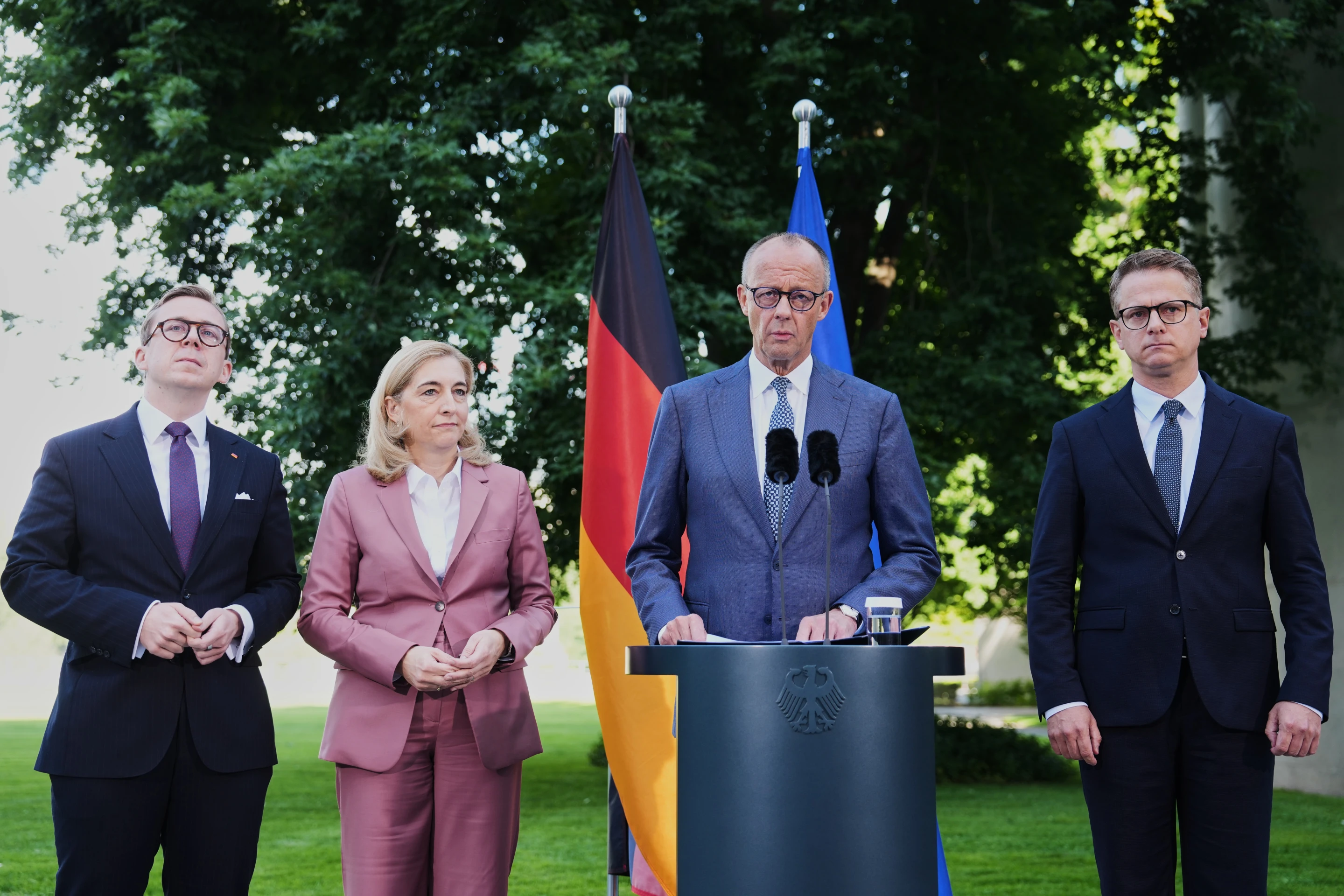
German Chancellor Friedrich Merz has reshuffled key government positions in an effort to strengthen his unpopular coalition and respond to growing support for the far-right Alternative for Germany party ahead of crucial regional elections.
Merz Reshuffles Government Team Amid Rising Political Pressure
German Chancellor Friedrich Merz has reshuffled several senior government positions as he attempts to improve the performance of his coalition and respond to growing political pressure from the rise of the far-right Alternative for Germany, or AfD. The changes come as Merz’s government faces declining public support and increasing criticism over its ability to deliver economic improvements and address national concerns. The coalition between Merz’s center-right Union bloc and the center-left Social Democrats has struggled to convince voters that it can provide effective leadership, creating an opportunity for opposition parties to gain momentum. The reshuffle is designed to strengthen coordination within the government, improve public confidence, and present a more effective image ahead of important regional elections. Merz has been under pressure to demonstrate that his administration can respond to economic challenges, manage domestic issues, and prevent voters from shifting toward the far-right. The personnel changes represent an attempt to reset the government’s approach while addressing internal disagreements and public frustration. Political analysts say the success of the reshuffle will depend on whether the new leadership team can deliver visible results and rebuild trust among voters.
Nina Warken Becomes First Woman to Lead Chancellery Office
One of the most significant changes in the reshuffle is the appointment of Health Minister Nina Warken as the new head of the chancellery, making her the first woman to hold the powerful coordinating role. The position is responsible for managing communication between the chancellor’s office, government ministries, and lawmakers. Warken’s appointment is viewed as part of Merz’s effort to strengthen government organization and bring new leadership into his administration. Her previous role overseeing health policy placed her at the center of major domestic issues, including efforts to reform Germany’s healthcare system. Carsten Linnemann is expected to replace Warken as health minister, while other senior changes are aimed at improving political coordination. The move highlights Merz’s attempt to combine experience with a refreshed leadership structure as his government faces growing challenges. Supporters of the reshuffle argue that bringing new figures into important roles can improve decision-making and strengthen the coalition’s ability to respond to public concerns. Critics, however, question whether personnel changes alone can solve deeper political problems affecting the government.
AfD Gains Momentum as Voters Express Frustration
The reshuffle comes as Germany’s far-right Alternative for Germany party continues gaining support among voters dissatisfied with the current government. The AfD has benefited from concerns about immigration, economic uncertainty, and frustration with mainstream political parties. Analysts say the party’s growing popularity has increased pressure on traditional parties, including Merz’s conservative Union bloc, to address voter concerns more effectively. Merz has attempted to position his government as a response to these challenges by focusing on economic reforms, administrative changes, and policies aimed at restoring confidence. However, critics argue that slow progress and internal disagreements have weakened the coalition’s public image. The rise of the AfD has become one of the biggest political challenges facing Germany’s established parties. Regional elections are expected to serve as an important test of voter sentiment and could influence the future direction of German politics. The government’s ability to prevent further gains by the far right may depend on whether it can address issues that have contributed to public dissatisfaction.
Economic Concerns Add Pressure on Merz Coalition
Economic challenges have been a major factor contributing to dissatisfaction with Merz’s government. Germany, Europe’s largest economy, has faced periods of weak growth, industrial pressure, and uncertainty linked to global economic conditions. Merz entered office promising reforms designed to strengthen competitiveness, encourage investment, and improve economic performance. However, voters have expressed frustration over the pace of change and the government’s ability to deliver immediate improvements. The coalition has faced criticism over disagreements between its political partners, making it difficult to present a unified message. Business leaders have called for clearer policies to support economic growth, while voters have raised concerns about living costs, energy prices, and employment security. The reshuffle is intended to improve government effectiveness and create a stronger response to these challenges. Political observers say economic performance will likely play a major role in determining whether Merz can regain public support or whether opposition parties continue gaining influence.
Regional Elections Could Become Major Test for Government
The timing of Merz’s reshuffle is closely connected to upcoming regional elections, where the performance of his coalition parties will be closely watched. These elections could provide an early indication of voter confidence in the national government and reveal whether the AfD’s recent gains are continuing. A strong performance by the far-right party could increase pressure on Merz and intensify debates about Germany’s political direction. Government supporters hope that the new leadership structure will improve communication and demonstrate progress before voters head to the polls. Opposition parties argue that the reshuffle reflects deeper problems within the coalition rather than a solution to them. Regional elections often influence national political discussions in Germany because they provide insight into public opinion between federal elections. The results could shape future strategies for both the government and opposition parties as they prepare for upcoming political battles.
Merz Faces Challenge of Restoring Confidence in Government
The government reshuffle represents a critical moment for Friedrich Merz as he attempts to restore confidence in his leadership and strengthen his coalition. While changing key personnel can improve coordination and create a renewed sense of direction, political analysts say lasting success will depend on policy results. Merz must demonstrate that his government can address economic concerns, manage domestic challenges, and prevent further gains by far-right forces. The rise of the AfD has created a difficult political environment in which traditional parties must respond to voter concerns while maintaining their broader political principles. The coming months will test whether Merz’s strategy can stabilize his government and rebuild support among German voters. The reshuffle signals an effort to present a stronger administration, but the ultimate judgment will depend on whether citizens see meaningful improvements in their daily lives.