Fresh Russian and Ukrainian attacks have killed at least 15 people, according to officials on both sides. Russian strikes in Ukraine claimed three lives, while Ukrainian drone attacks in Russian-occupied territory reportedly killed 12 people, highlighting the escalating cycle of cross-border violence.
Deadly Weekend of Cross-Border Attacks
The war between Russia and Ukraine intensified over the weekend as a fresh wave of attacks left at least 15 people dead across both countries and Russian-occupied territories. Ukrainian officials reported that Russian drone strikes in the northeastern Sumy region killed three employees of Nova Poshta, one of Ukraine's largest private postal and logistics companies. Emergency responders said the attack struck company facilities while employees were working, causing severe damage to surrounding infrastructure and disrupting logistics operations in the region. Meanwhile, Russian-installed authorities in the occupied Zaporizhzhia region said Ukrainian drone attacks targeted holiday resorts and recreational areas, killing 12 people, including four children, and injuring 19 others. The claims from both sides could not be independently verified, as access to the affected areas remains limited because of ongoing fighting. The exchange of attacks comes as both Russia and Ukraine continue expanding the use of long-range drones and missiles capable of striking targets far from the front lines. Military analysts say the conflict has entered a phase where aerial attacks have become almost daily occurrences, affecting civilian populations and infrastructure across a wide geographical area. Officials on both sides condemned the attacks and blamed the opposing military for deliberately targeting civilians, allegations that each country has consistently denied since the full-scale invasion began in 2022.
Russian Drone Strike Hits Ukrainian Logistics Hub
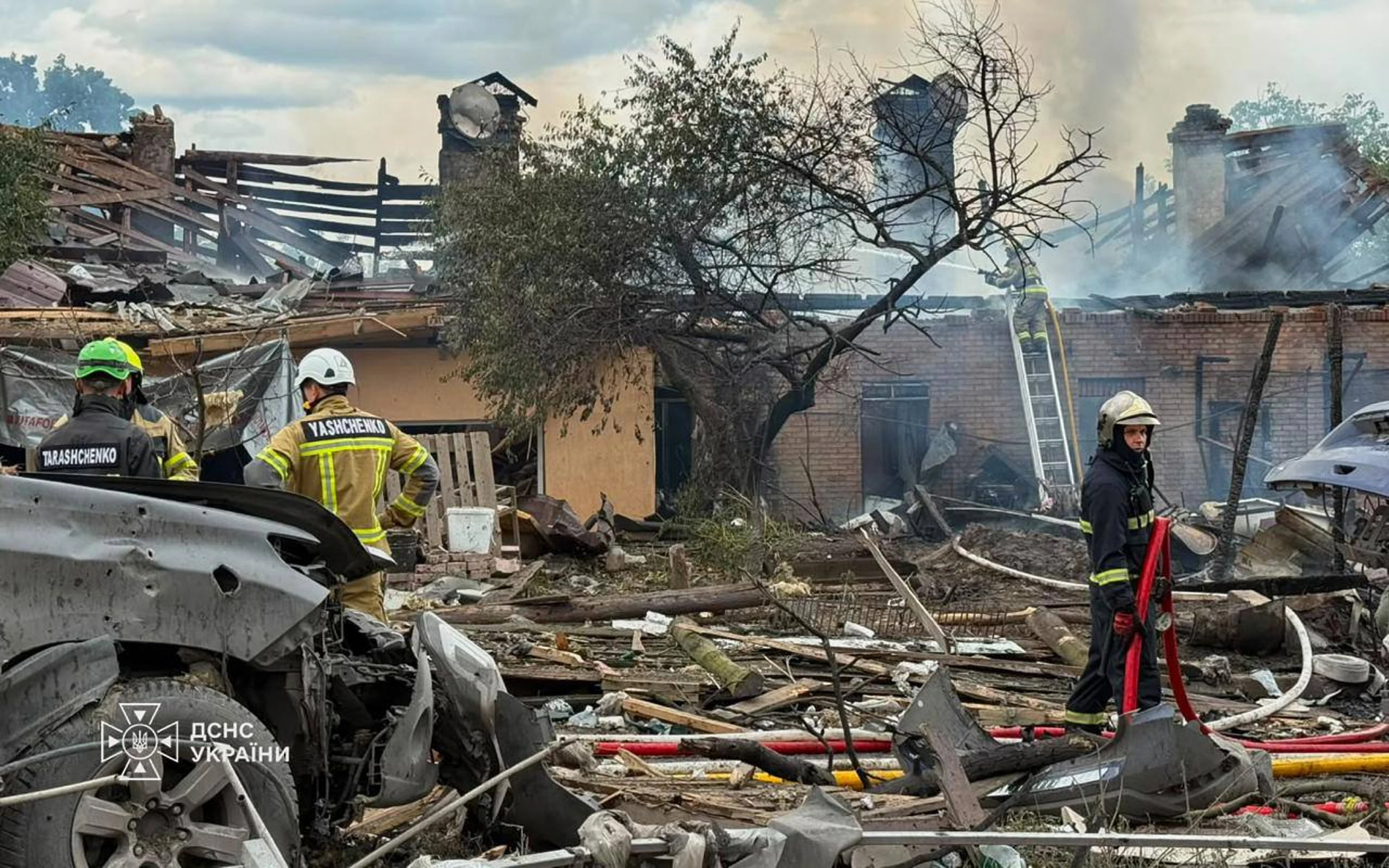
According to Ukrainian authorities, one of the deadliest Russian attacks occurred in the Sumy region near Ukraine's northern border with Russia. A drone strike reportedly hit facilities belonging to Nova Poshta, a major courier and logistics company that has played a critical role in delivering humanitarian aid, commercial goods, and essential supplies throughout the war. Officials said three company employees were killed while performing their duties, while additional workers sustained injuries and nearby buildings suffered extensive damage. Emergency crews spent several hours extinguishing fires and clearing debris from the site before investigators began documenting evidence of the attack. President Volodymyr Zelenskyy condemned the strike, describing it as another example of Russia targeting civilian infrastructure rather than legitimate military objectives. Ukrainian officials argued that attacks on logistics companies disrupt humanitarian operations and complicate efforts to deliver essential goods to communities affected by the conflict. Air-raid sirens continued sounding across several Ukrainian regions throughout the day as authorities warned residents about the possibility of additional missile and drone attacks. Local governments urged civilians to remain close to bomb shelters and follow official safety instructions whenever alerts were issued. The latest strike adds to growing concerns about Russia's continued use of drones against civilian infrastructure, which humanitarian organizations say has increased pressure on already strained emergency services and recovery efforts.
Ukraine Accused of Deadly Drone Attack in Occupied Territory
Russian-installed officials in the occupied Zaporizhzhia region accused Ukraine of carrying out a large-scale drone attack on holiday resorts that reportedly killed 12 people, including four children. According to occupation authorities, multiple drones struck recreational facilities where civilians were gathered, causing extensive destruction and leaving dozens injured. Emergency responders searched damaged buildings for survivors while firefighters worked to contain blazes triggered by the explosions. Russian investigators announced they had opened a criminal inquiry into the attack, describing it as an act of terrorism against civilians. Ukrainian authorities did not immediately comment on the allegations, maintaining their longstanding policy of rarely discussing operations conducted inside Russian-controlled territory. Kyiv has consistently stated that its military focuses on legitimate military objectives, including command centers, supply depots, fuel facilities, and logistical infrastructure supporting Russian forces. Independent verification of the reported casualties remains difficult because journalists and international observers have limited access to occupied regions. Military experts note that Ukraine has significantly expanded its long-range drone capabilities over the past year, allowing it to strike deeper into territories under Russian control. These operations are intended to weaken Russia's military logistics and reduce its operational capabilities, although Moscow frequently accuses Kyiv of targeting civilian areas. The incident underscores the increasing complexity of the conflict, where competing narratives often emerge following major attacks.
Drone Warfare Continues to Escalate
The latest exchange of attacks reflects the growing importance of drone warfare in the conflict between Russia and Ukraine. Both countries have dramatically expanded domestic drone production while incorporating increasingly sophisticated unmanned aircraft into military operations. Russia continues launching large waves of attack drones alongside ballistic and cruise missiles in attempts to overwhelm Ukraine's air-defense systems, while Ukraine has developed long-range drones capable of reaching military facilities, oil refineries, air bases, and logistical centers deep inside Russian-controlled territory. Military analysts say drones provide relatively low-cost yet highly effective methods of disrupting supply chains and military infrastructure without exposing pilots to direct combat. However, as aerial attacks become more frequent, civilians remain increasingly vulnerable because many strikes occur near populated areas or critical public infrastructure. Air-defense operators on both sides are now tasked with intercepting complex combinations of drones, missiles, and decoy systems launched simultaneously to confuse defensive networks. Western defense experts believe unmanned systems will continue shaping battlefield operations throughout the conflict as technological improvements increase their range, precision, and resistance to electronic warfare. Humanitarian organizations continue warning that regardless of military objectives, repeated aerial bombardments place civilian populations under constant psychological stress while damaging homes, hospitals, schools, transportation networks, and energy infrastructure.
Diplomatic Efforts Remain Overshadowed by Fighting
The renewed violence comes as international diplomatic efforts to reduce hostilities continue facing major obstacles. Ukrainian President Volodymyr Zelenskyy is expected to hold further discussions with international partners regarding military assistance, particularly additional air-defense systems capable of intercepting advanced ballistic missiles and drones. Western governments have reaffirmed their support for Ukraine while continuing to impose sanctions on Russia, although no immediate breakthrough toward a ceasefire appears likely. The Kremlin has maintained that its military operations will continue until strategic objectives are achieved, while Ukraine insists that restoring its territorial integrity remains essential for any lasting peace agreement. Humanitarian organizations have urged both sides to respect international humanitarian law and avoid attacks that place civilians at unnecessary risk. The United Nations has repeatedly expressed concern over rising civilian casualties and the continued destruction of critical infrastructure throughout the region. Security analysts believe the frequency of long-range missile and drone attacks may increase further as both militaries attempt to strengthen their positions ahead of any future negotiations. With no immediate signs of de-escalation, civilians across Ukraine and Russian-controlled territories continue living under the constant threat of air raids, missile strikes, and drone attacks, illustrating the enduring humanitarian cost of a conflict that has now entered another year without a comprehensive peace settlement.